Ashwagandha: The Complete Science & Wisdom Guide

Discover the science and Ayurvedic tradition behind the world's most revered adaptogen. Learn about its benefits for stress, sleep, and your unique body type.

The 10-Second Summary

What is Ashwagandha? It's an ancient Ayurvedic adaptogen proven by modern science to regulate cortisol (your stress hormone). If you're battling burnout, poor sleep, or hormonal imbalances, it acts like a thermostat for your nervous system, bringing your body back to calm center. Not all extracts are equal, so reading the label matters.

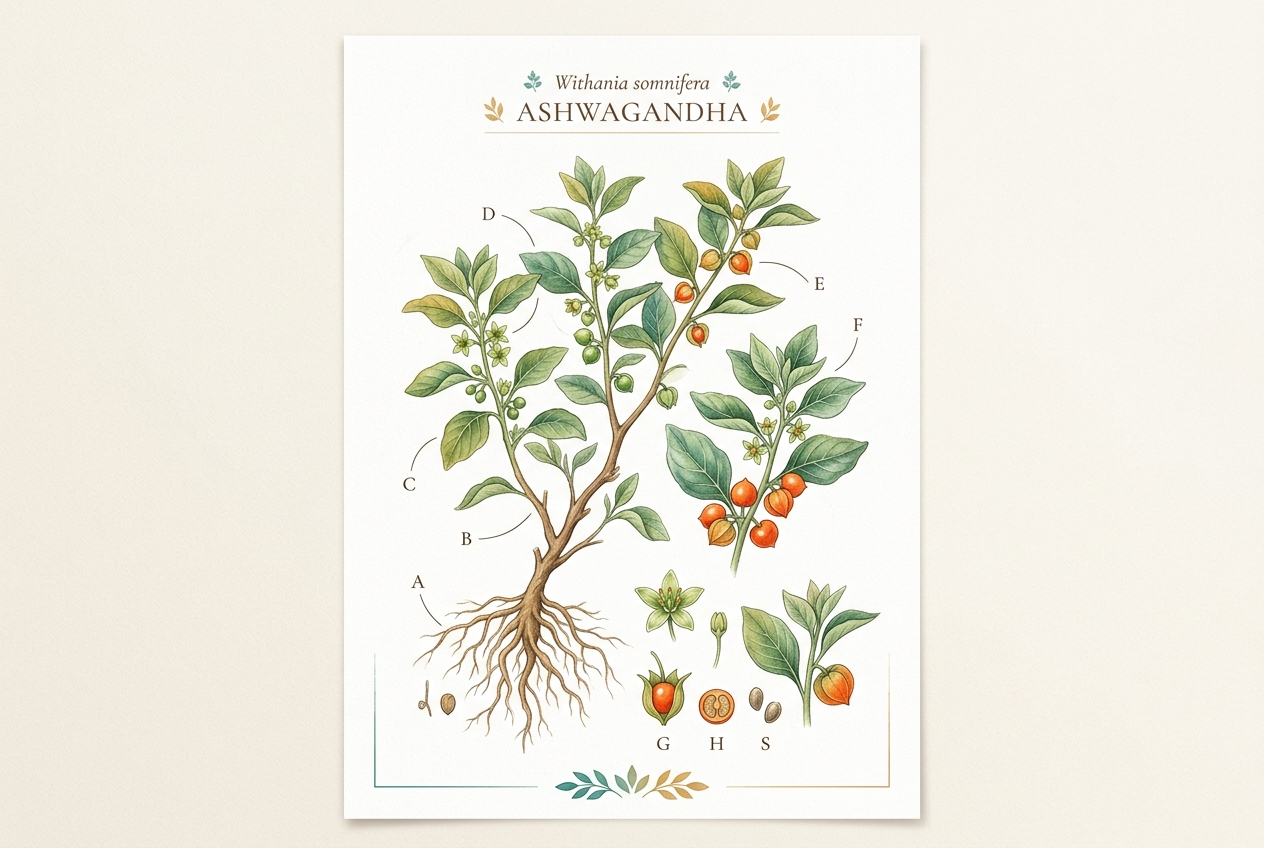
Botanical illustration of Ashwagandha plant

What Exactly Is It?

Ashwagandha (Withania somnifera) is a small, woody shrub native to India and North Africa. The name comes from Sanskrit: Ashwa means "horse" and Gandha means "smell"—hinting at its earthy roots and the ancient belief that it imparts the strength and vitality of a stallion.

In classical Ayurveda, it's classified as a Rasayana, an elite class of rejuvenating tonics designed to promote longevity and preserve youth. While the leaves and berries have uses, the magic—and almost all the clinical research—is in the roots.


3000+
Years of Use
27.9%
Cortisol Drop
300+
Clinical Studies
Self-Assessment

Is Ashwagandha Right For You?

Check the symptoms you regularly experience to see if an adaptogen fits your lifestyle.

"It doesn't sedate you. It modulates you. Ashwagandha acts as a thermostat for a nervous system stuck on high."

What does it actually do?

Stress & Sleep Regulation

The most validated benefit. Ashwagandha actively buffers the Hypothalamic-Pituitary-Adrenal (HPA) axis, preventing the over-secretion of cortisol.

Deep Sleep Architecture: It mimics GABA (your brain's calming neurotransmitter), significantly improving sleep onset and the time spent in restorative slow-wave sleep.
Person sleeping peacefully

Fitness & Strength

Increasingly popular among athletes for its ergogenic (performance-enhancing) effects and recovery benefits.

Muscle & Oxygen: Clinical trials show significant increases in VO2 max, muscle strength, and size, alongside reduced exercise-induced muscle damage.
Woman doing fitness training

Hormonal Balance

By lowering stress, the body can prioritize reproductive and metabolic hormones.

For Men & Women: Supports healthy testosterone in men and aids in female hormonal balance (including mild PCOS support and perimenopause symptoms).
Ayurvedic herbs

Brain & Immunity

Known in Ayurveda as a Medhya Rasayana (intellect promoter), it protects cognitive function.

Neuroprotection: Improves executive function, sustained attention, and processing speed while stimulating natural killer (NK) immune cells.
Morning wellness routine
The Science

Evidence Strength

Stress & Anxiety Reduction Strong
Sleep Quality Improvement Strong
Physical Performance & Strength Moderate
Thyroid Support (Subclinical) Emerging

Find Your Protocol

Not all Ashwagandha is the same. The dosage depends entirely on the type of extract and your specific goal.

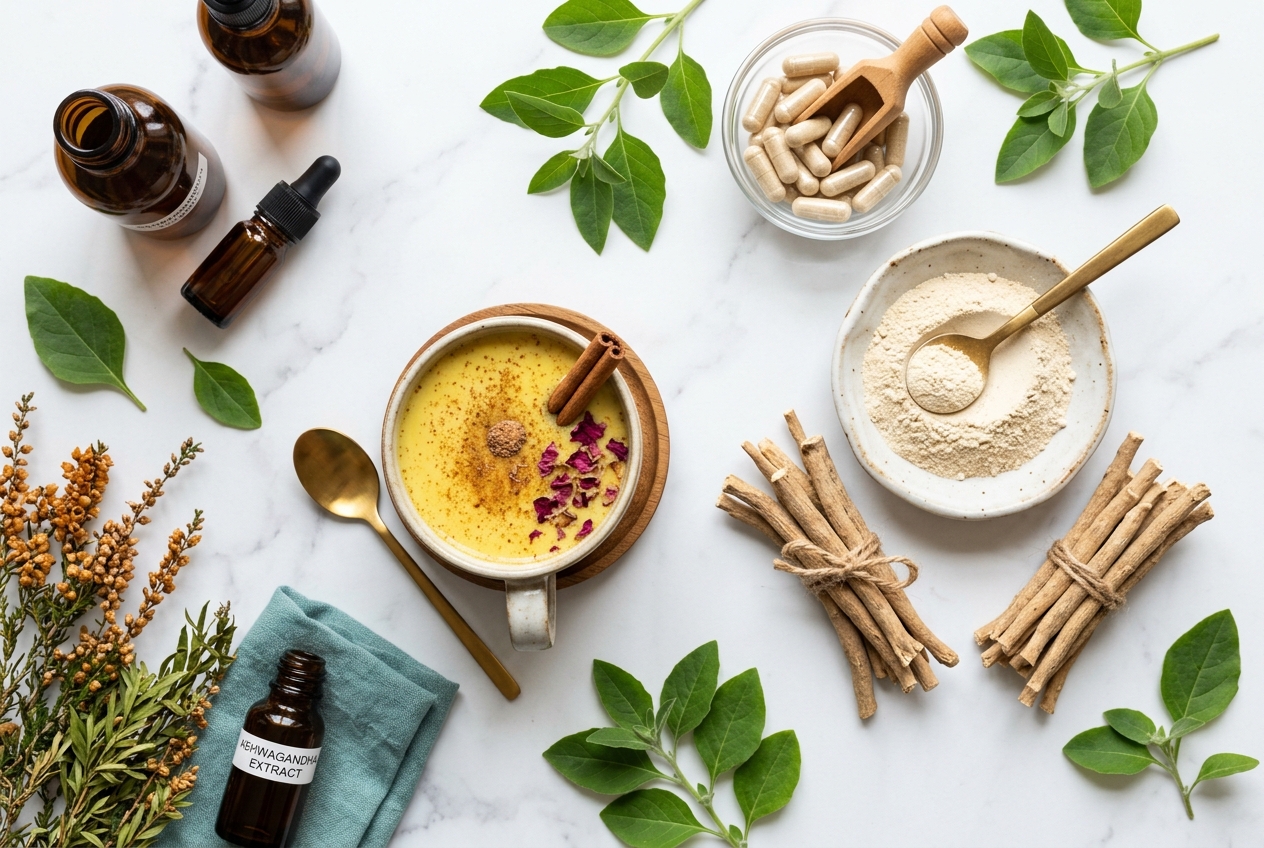
Different forms of Ashwagandha
The Journey

What to Expect

Ashwagandha is not a quick fix. It takes time to rebuild your nervous system.

Days 1-7

Subtle Calm: You may not feel drastically different, but many report falling asleep faster and experiencing slightly less daytime jitteriness.

Weeks 2-3

Cortisol Dropping: You might notice you aren't reacting as sharply to stressful triggers. Sleep architecture improves, resulting in deeper rest.

Weeks 4-6

Systemic Balance: HPA axis begins to stabilize. Energy levels feel more sustained throughout the day without the afternoon crash.

Weeks 8+

Peak Resilience: This is where clinical trials show maximum cortisol reduction. Hormonal and cognitive benefits become most apparent.

Safety & Side Effects

While well-tolerated by the vast majority, Ashwagandha is not without potential side effects. Mild issues can include gastrointestinal upset or daytime drowsiness if the dose is too high.

Important Contraindications

Do NOT take Ashwagandha without medical supervision if you fall into these categories:

"Stress destroys Ojas; Ashwagandha restores it. It kindles the fire just enough to build vitality."
Debunking

Myth vs Fact

Myth: It works instantly
Fact: It's an adaptogen, not a sedative. It takes 2-4 weeks of consistent use to balance your HPA axis.
Myth: It causes weight gain
Fact: By lowering cortisol, it actually helps prevent stress-induced abdominal fat accumulation.
Myth: More is always better
Fact: High doses cause GI distress and lethargy. Stick to clinical doses (e.g., 300-600mg KSM-66).
Myth: All extracts are the same
Fact: A 5% withanolide extract acts vastly differently than raw powder. Extract dictates efficacy.

Frequently Asked Questions

For overall stress resilience, taking it in the morning with breakfast is ideal. If you are specifically taking it to combat insomnia, take your dose 1-2 hours before bed.

Yes, often positively. Many people take Ashwagandha alongside their morning coffee. The herb helps "smooth out" the caffeine jitters, providing calm, focused energy.

For the vast majority, yes. However, rare cases of idiosyncratic liver injury have been reported. Always buy high-quality, third-party tested brands and avoid if you have pre-existing liver disease.

While there is no strict scientific consensus, functional medicine practitioners often recommend taking a 2-4 week break after 3-6 months of continuous use to prevent tolerance.

Medical Disclaimer

The content provided on Swayu is for informational purposes only and is not intended as medical advice, diagnosis, or treatment. Always consult with a qualified healthcare physician before starting any new supplement regimen.