How stress destroys your digestive system — and two healing philosophies to fix it.
Your gut has its own nervous system with 500 million neurons. When you're chronically stressed, it's not just butterflies — it's acid overproduction, microbiome collapse, and tissue damage. Here's how both modern and traditional medicine approach healing, from PPIs and triple therapy to Ayurvedic adaptogens, mindful eating, and kitchen pharmacies.
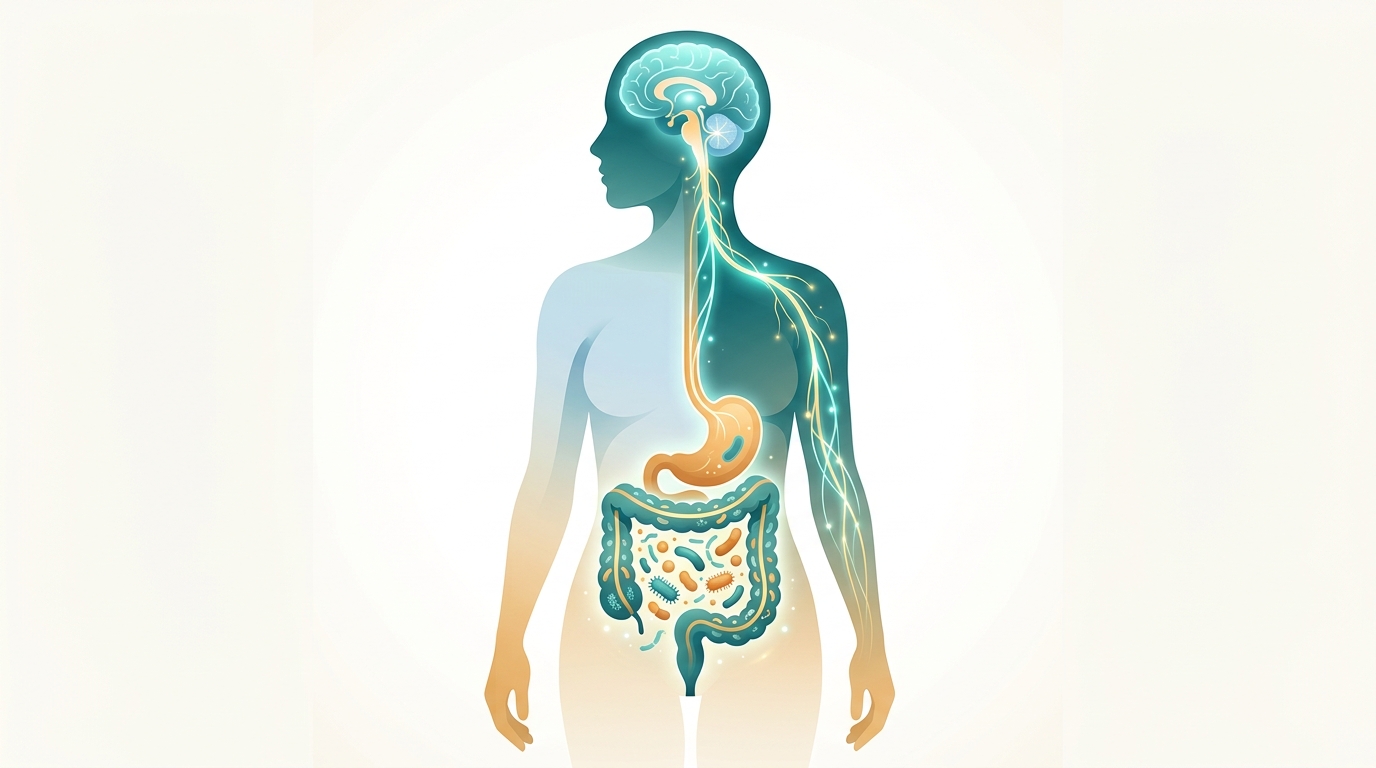
Ever noticed how anxiety gives you stomach cramps? That's not coincidence. Your gut is literally a "second brain" known as the Enteric Nervous System. It houses an astounding network of neurons that communicate constantly with your brain.
This communication happens via the vagus nerve, a massive superhighway linking your emotional centers to your digestion. When your brain perceives stress, it sends alarm signals straight down this highway, completely altering how your gut functions, from how fast food moves, to how much acid is produced, and even which bacteria thrive.

It's not just "in your head". Stress creates very real, measurable, physiological chaos.
Stress heavily stimulates the production of stomach acid (HCl) while simultaneously reducing the protective mucosal barrier.
Cortisol and adrenaline literally change the environment of your gut, making it hostile to beneficial bacteria like Lactobacilli and Bifidobacteria.
Your intestinal wall is only one cell thick, held together by "tight junctions." Chronic stress signals cause these junctions to loosen.
Fight-or-flight mode halts normal digestion. Depending on your nervous system's reaction, motility either screeches to a halt or goes into overdrive.
Check the symptoms you regularly experience to determine your gut-stress load.
Proton Pump Inhibitors (omeprazole, pantoprazole) are the gold standard for immediate relief, shutting down the pumps in your stomach that make acid.
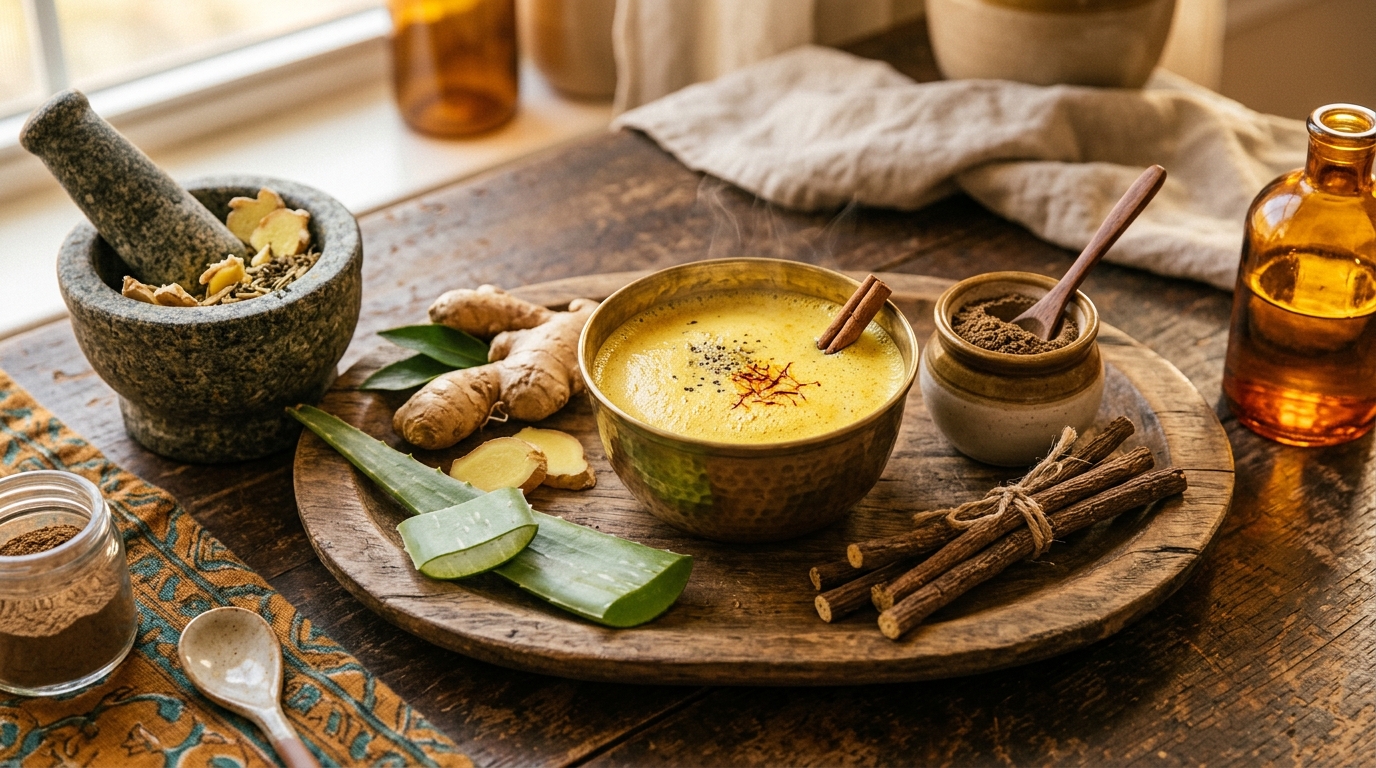
Ulcers and acid reflux are viewed as severe Pitta (fire) imbalances. Your digestive fire (Agni) has become too sharp and is burning the tissues.
Select your primary symptom to see a blended modern/traditional protocol.
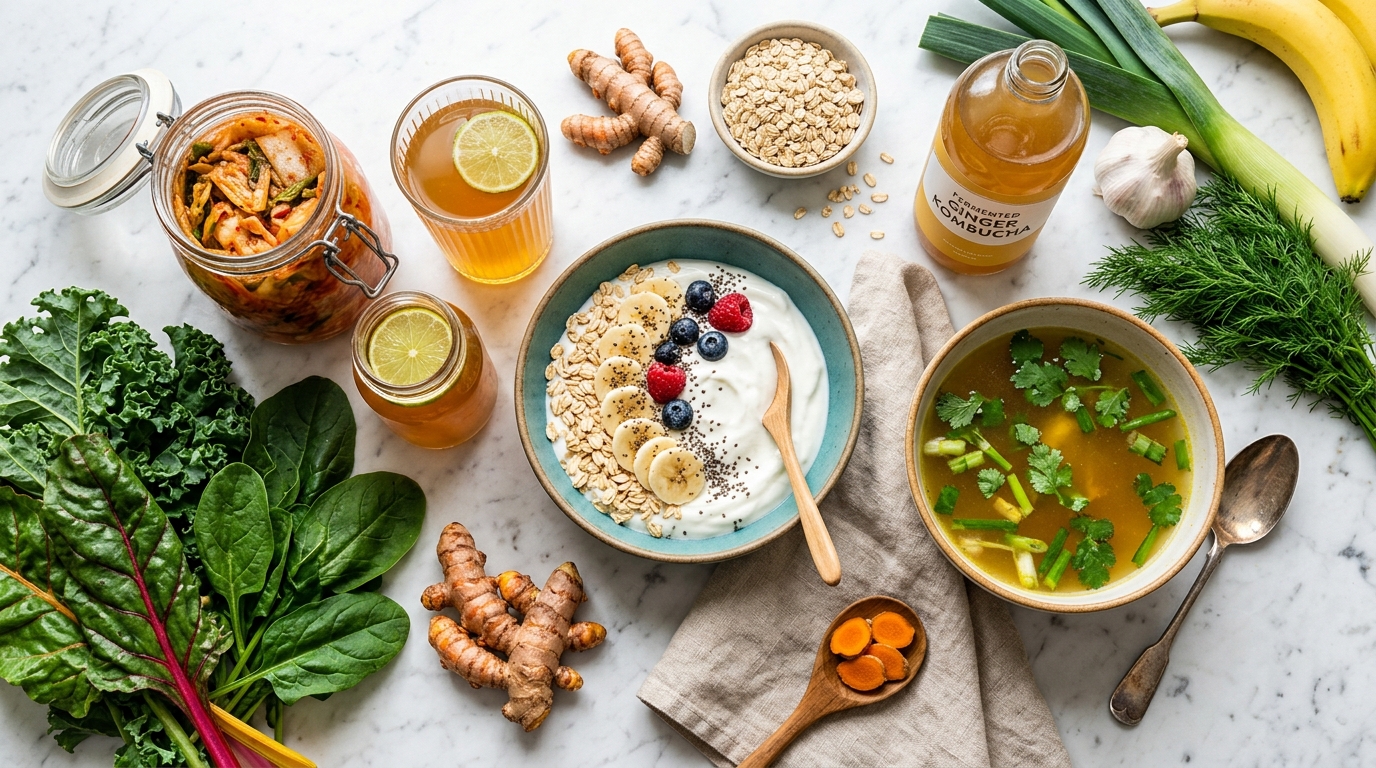
While healing, your digestive tract needs a break from difficult foods. Focus on easily digestible, nutrient-dense meals.
Gut healing is not linear. It requires consistency in both diet and stress management.
Symptom Control: Implementing a bland diet and medications/herbs begins to quickly calm acute burning, reflux, or cramping.
Mucosal Repair: The stomach lining begins to regenerate. You may tolerate slightly more diverse foods, but sticking to the protocol is crucial.
Motility Reset: As the nervous system calms, bowel movements normalize. Bloating decreases significantly as the microbiome shifts.
Resilience: The gut barrier is restored. You can enjoy a wider variety of foods and your digestion can handle occasional stress without a flare-up.
The fastest way to signal safety to your gut is through the vagus nerve using diaphragmatic breathing. Do this before every meal.
Gastritis is widespread inflammation, often causing a dull ache. An ulcer is a specific sore, usually causing a sharper, localized burning pain that may temporarily improve or worsen when you eat. An endoscopy is the only definitive way to know.
Yes, but it requires active management. You must build "stress buffers"—like daily breathing exercises, adaptogenic herbs, and strict boundaries around work hours and digital devices.
Generally yes, but start slow. If you have SIBO (Small Intestinal Bacterial Overgrowth), certain probiotics can make bloating worse. Spore-based probiotics or specific strains like Saccharomyces boulardii are often safer starting points.
It depends. A 12-hour overnight fast gives the migrating motor complex time to clean the gut. However, prolonged fasting can increase cortisol and stomach acid in some people, exacerbating ulcers.
Medically known as intestinal permeability, it occurs when the tight junctions between intestinal cells loosen, allowing toxins and undigested food to enter the bloodstream, triggering systemic inflammation.
Healthy foods like broccoli, beans, and raw salads are high in FODMAPs and fiber, which require robust digestion. If your gut is stressed, it lacks the enzymes and motility to process them, leading to fermentation and gas.
With aggressive treatment (like PPIs) and diet changes, a standard ulcer typically heals in 4 to 8 weeks.
Coffee doesn't directly cause ulcers, but it highly stimulates acid production and relaxes the esophageal sphincter (causing reflux). It should be strictly avoided while healing an active ulcer.
Massive. Sleep is when tissue repair and microbiome rebalancing occurs. Poor sleep increases morning cortisol, restarting the cycle of gut inflammation.
Indirectly, yes. By significantly lowering cortisol and buffering the stress response, Ashwagandha removes the primary trigger for stress-induced gut dysfunction.
The content provided on Swayu is for informational purposes only and is not intended as medical advice, diagnosis, or treatment. Always consult with a qualified gastroenterologist or physician if you suspect an ulcer or chronic GI condition.