Stress & Hair Loss: The Best Supplements That Actually Work

From Minoxidil to Bhringraj — what modern dermatology and 5000 years of Ayurveda recommend for stress-induced hair loss

The Quick Answer

Stress-induced hair loss (telogen effluvium) is usually reversible. The right combination of evidence-based supplements, traditional botanicals, and lifestyle changes can restore your hair — but only if you address the stress driving it. Here's your complete guide.

Blog > Hair Health > Stress Hair Loss Supplements
May 2, 2026 • 20 min read
55%
Women Affected
100K
Hairs Shed Daily (Normal)
6mo
Typical Recovery Timeline
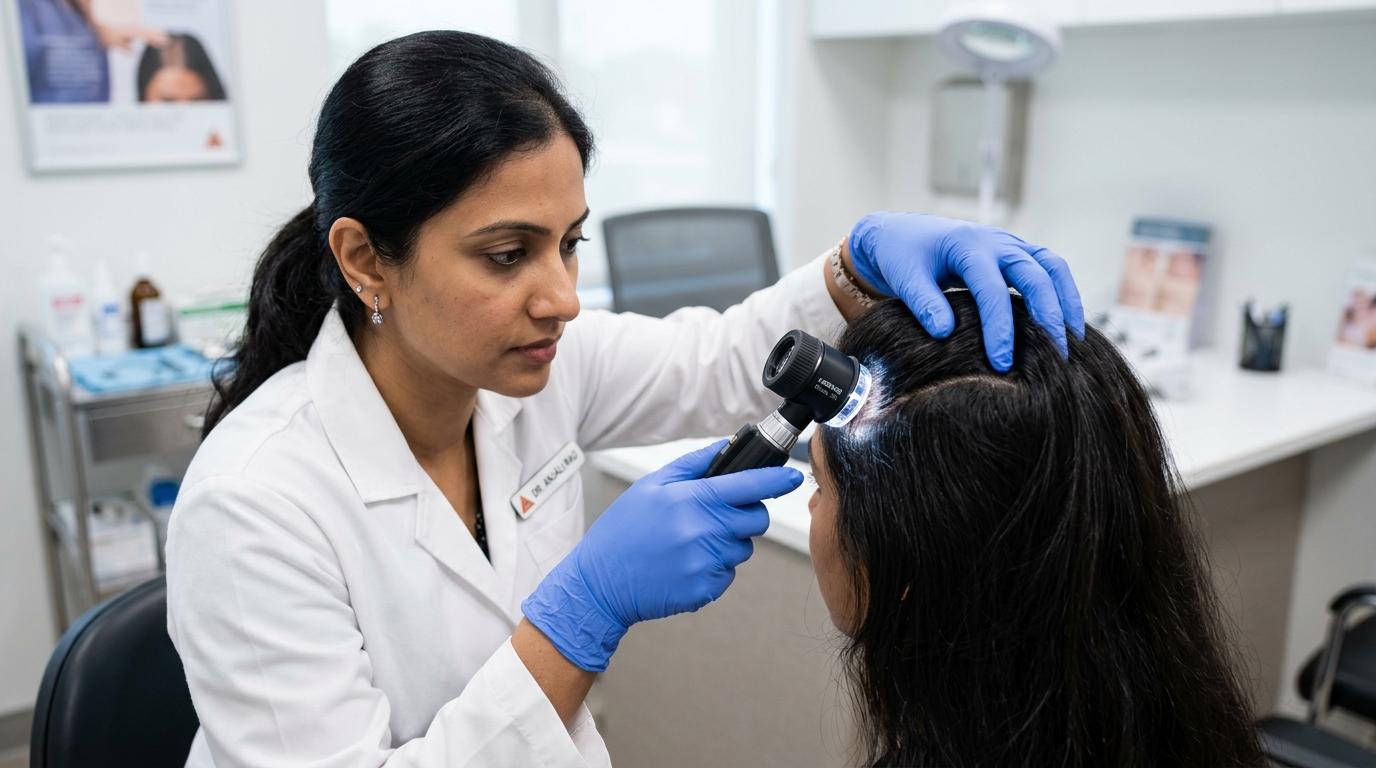
Dermatologist examining scalp

How Stress Destroys Your Hair

Finding clumps of hair on your pillow is terrifying. But understanding WHY it's happening is the first step to fixing it.

Stress-induced hair loss, technically called telogen effluvium, isn't just about feeling a bit worried. It's a physiological response where a surge of cortisol shocks your hair follicles out of their growth phase and prematurely into a resting state.

Unlike alopecia areata (an autoimmune condition where hair falls out in patches) or androgenetic alopecia (genetic thinning driven by DHT), telogen effluvium causes diffuse shedding all over the scalp, typically 2 to 3 months after a major stressful event.
The Hair Growth Cycle

How stress disrupts the natural lifecycle of your hair follicles.

1. Anagen

The Growth Phase (2-7 years)
Normally, 85-90% of your hair is in this phase, actively growing.

2. Catagen

The Transition Phase (2-3 weeks)
The hair follicle shrinks and detaches from the blood supply.

3. Telogen

The Resting Phase (3 months)
The hair rests. In stress, up to 70% of hairs are pushed into this phase simultaneously.

4. Exogen

The Shedding Phase
The resting hair falls out, making room for new anagen growth.

"Most hair supplements are expensive multivitamins. Only a handful have real clinical evidence for stress-induced hair loss."

Is Your Hair Loss Stress-Related?

Check the symptoms that apply to you to understand your hair loss profile.

Modern Medicine's Top Supplements

What dermatologists recommend and prescribe.

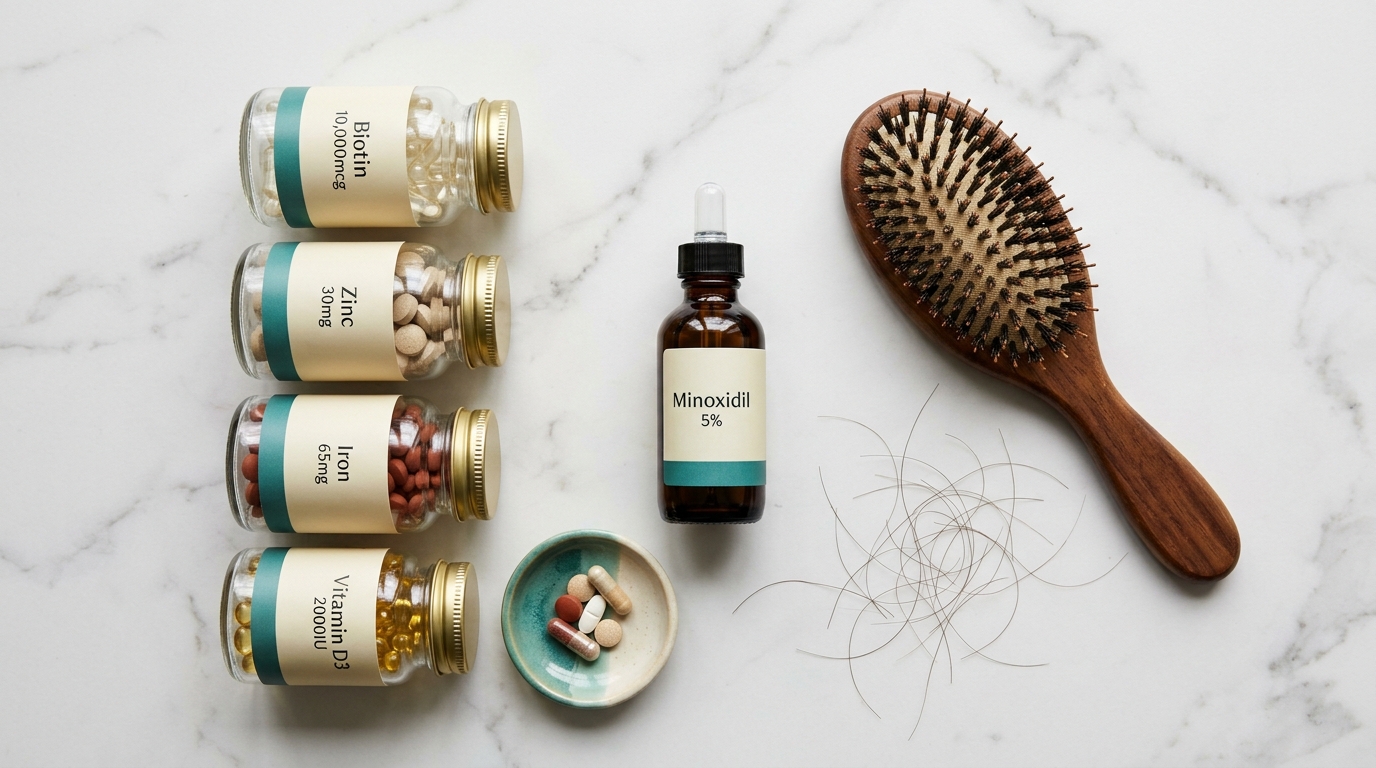
Minoxidil (Rogaine)

The only FDA-approved over-the-counter treatment for hair loss.

  • Mechanism: Acts as a vasodilator, opening blood vessels in the scalp to bring oxygen and nutrients to follicles, extending the anagen (growth) phase.
  • Application: Available in 2% or 5% solutions/foams.
  • Timeline: Takes 3 to 6 months to see visible results.
  • Evidence: Strong (Olsen 2002, Lucky 2004).
Minoxidil and modern hair loss supplements

Biotin, Iron & Zinc

Effective primarily when a deficiency is present.

  • Biotin: Often recommended at 5000mcg daily, though clinical evidence is lacking unless you have a true deficiency.
  • Iron (Ferritin): Ferritin levels below 40 ng/mL are strongly associated with hair loss in women.
  • Zinc: Crucial for hair tissue growth and repair (Karashima 2012).
  • Evidence: Moderate (Strong for true deficiency cases).
Vitamins, Biotin, and Iron supplements

Finasteride & Spironolactone

Prescription medications aimed at hormonal hair loss.

  • Finasteride: Blocks DHT production (primarily for men).
  • Spironolactone: An anti-androgen often prescribed for female pattern hair loss.
  • Usage: More targeted toward androgenetic alopecia than pure stress-induced telogen effluvium, though stress can exacerbate genetic thinning.
  • Evidence: Strong for AGA (Kaufman 1998).
Dermatologist examining scalp for hormonal hair loss

Emerging: PRP, LLLT, Nutrafol

The latest clinical and nutraceutical approaches.

  • PRP Injections: Platelet-Rich Plasma uses your own blood to stimulate follicle growth.
  • LLLT (Low-Level Laser Therapy): Red light devices that may improve cell metabolism in follicles.
  • Proprietary Blends: Products like Nutrafol combine ashwagandha, saw palmetto, and biotin to target multiple causes of hair thinning, including stress.
  • Evidence: Moderate to Emerging (Gentile 2015 for PRP).
Clinical treatments for hair loss

Evidence Base: Modern Supplements & Treatments

Minoxidil for regrowth Strong
Iron (if deficient) Strong
Biotin (if deficient) Moderate
PRP injections Moderate
Nutrafol / Proprietary blends Emerging
"In Ayurveda, hair is called the 'mala' (waste product) of Asthi Dhatu (bone tissue). Weak bones, weak hair. It's all connected."

Traditional Medicine's Approach

Holistic healing for the scalp and the nervous system.

Ayurvedic Herbs

Botanicals targeted at reducing systemic stress and nourishing follicles.

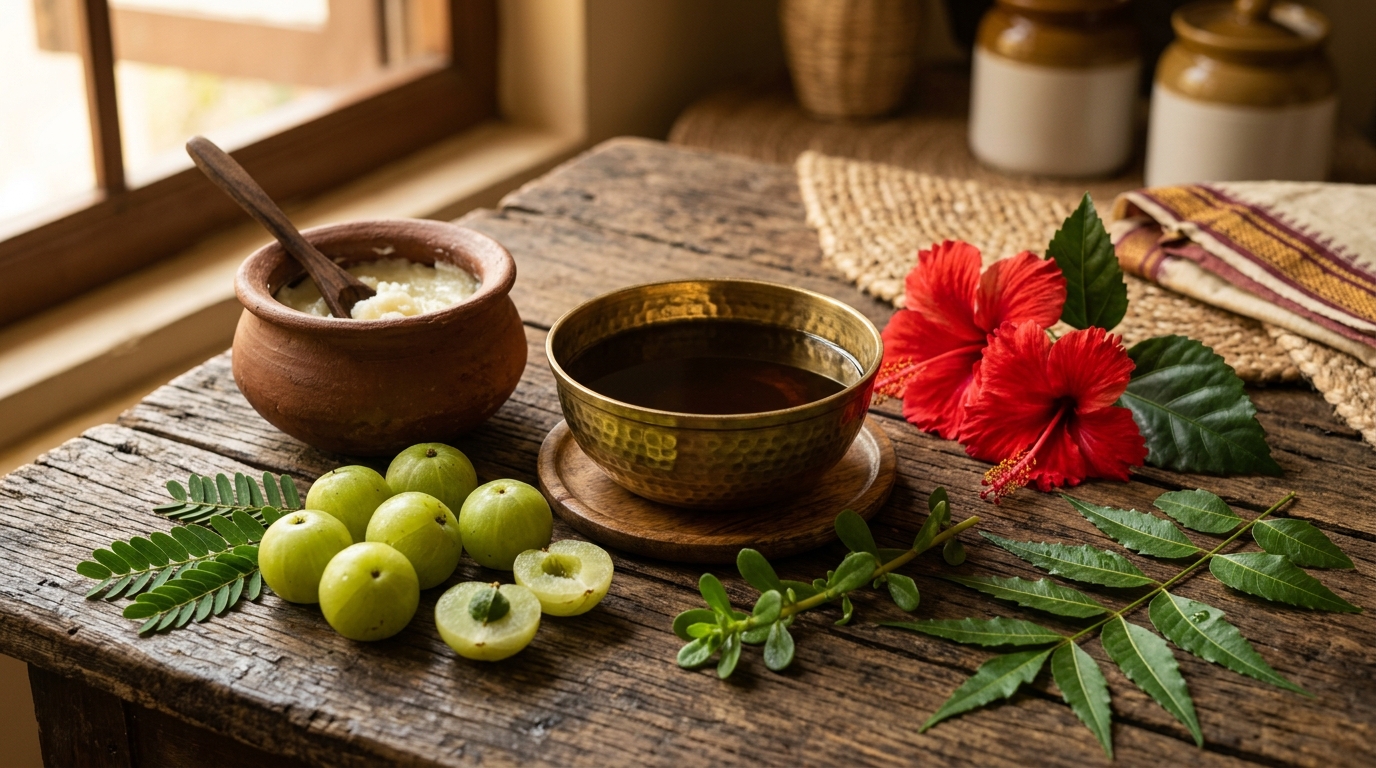
  • Bhringraj (Eclipta alba): Known as the 'king of hair herbs' in Ayurveda, studies suggest it promotes hair growth faster than minoxidil in animal models (Datta 2009).
  • Amla: Extremely high in Vitamin C and antioxidants, crucial for collagen production.
  • Brahmi: Used for dual action: calming the nervous system and supporting hair thickness.
  • Ashwagandha: Lowers cortisol levels, directly mitigating the stress response that causes telogen effluvium (Chandrasekhar 2012). Read our full guide on Ashwagandha.
Ayurvedic herbs for hair: Bhringraj, Amla, Ashwagandha

Traditional Hair Oils

The practice of 'Champi' (warm oil massage) is central to Ayurvedic hair care.

  • Coconut Oil: Unique among oils because its lauric acid can actually penetrate the hair shaft to prevent protein loss (Rele 2003).
  • Bhringraj & Hibiscus Oil: Infused oils used to stimulate scalp circulation and follicle health (Adhirajan 2003).
  • Castor Oil: Rich in ricinoleic acid, which may boost scalp health.
  • The Ritual: Massage warm oil into the scalp 1-2 times a week to reduce stress and improve blood flow.
Woman performing traditional hair oil massage

TCM Approach

Traditional Chinese Medicine views hair loss as a reflection of blood and kidney health.

  • Blood Deficiency (Xue Xu): TCM practitioners often attribute thinning hair to poor blood quality or circulation.
  • He Shou Wu (Fo-Ti): A famous herb for hair darkening and growth, though it must be used with caution due to potential liver toxicity.
  • Dang Gui: Angelica sinensis, used to invigorate the blood.
  • Acupuncture: Employed to improve scalp micro-circulation and balance nervous system tone (Yun 2012).
Traditional Chinese Medicine herbs

Kitchen Remedies

Accessible, natural treatments backed by emerging science.

  • Onion Juice: High in dietary sulfur. Shown in small studies to help with alopecia areata (Sharquie 2002).
  • Fenugreek (Methi) Seeds: Used as a paste to soothe scalp inflammation and condition hair.
  • Green Tea Rinse: Contains EGCG, which may help reduce DHT levels on the scalp and stimulate growth (Kwon 2007).
  • Aloe Vera: A cooling gel mask to reduce scalp irritation and clear sebum.
Kitchen remedies and healthy foods for hair

Evidence Base: Traditional & Botanical Approaches

Coconut oil for damage Strong
Bhringraj (Eclipta alba) Mod-Strong
Ashwagandha for stress Moderate
Onion juice for alopecia Moderate
He Shou Wu Limited (Safety Concerns)
Interactive

Build Your Hair Recovery Protocol

Select the scenario that best describes your situation to see an integrative protocol.

Hair healthy foods and nutrition flat lay

The Hair-Healing Plate

Supplements are supplemental. Your foundation must be built on whole foods, especially when stress is depleting your nutrient reserves.

Myth vs Fact: Hair Loss Edition

Stress hair loss is permanent
It is usually fully reversible in 6-12 months once the stressor is removed.
Biotin fixes all hair loss
Biotin only helps if you're actually deficient, which is relatively rare.
Expensive supplements work better
Most contain the exact same basic vitamins you can get affordably.
Washing hair often causes loss
A clean scalp is healthier. Washing just reveals hairs that were already detached.
Cutting hair makes it grow thicker
Cutting only affects the shaft, not the follicle. It has no effect on density.
Ayurvedic oils are just coconut oil
Authentic formulations use specific botanical extracts like Bhringraj with proven active compounds.
Minoxidil works immediately
It takes a minimum of 3-6 months to see visible regrowth.
Only women get stress hair loss
Men get telogen effluvium too, though it's often masked by or mistaken for male pattern baldness.

Frequently Asked Questions

How long does stress hair loss last?

Telogen effluvium typically begins 2-3 months after a stressful event. Once the stress is resolved, shedding may continue for another 3-6 months before new growth becomes visible. Full recovery can take 12-18 months.

Can I use minoxidil and Ayurvedic oils together?

Generally yes, but not at the exact same time. Apply minoxidil as directed (usually twice daily to a dry scalp). You can use Ayurvedic oils as a pre-wash treatment 1-2 times a week, ensuring you wash the oil out fully before applying minoxidil.

Is Bhringraj oil actually proven to work?

Yes, animal studies have shown that Eclipta alba (Bhringraj) extract can promote hair growth, sometimes outperforming 2% minoxidil in transitioning follicles from the resting to the growth phase. Human clinical trials are smaller but promising.

Should I get blood tests before taking supplements?

Absolutely. Blindly supplementing iron or vitamin D can be dangerous. Have a dermatologist or doctor check your Ferritin, Vitamin D, Vitamin B12, Zinc, and Thyroid panels to supplement accurately.

Does scalp massage really help?

Yes. Standardized scalp massage has been shown to increase hair thickness by stretching the cells of hair follicles. It also reduces stress by lowering heart rate and blood pressure.

Biotin: how much is too much?

While biotin is water-soluble (excess is excreted), taking more than 5,000-10,000 mcg daily offers no extra benefit and can falsely alter important lab test results, including thyroid tests and heart attack markers.

Can stress hair loss become permanent?

Pure telogen effluvium is rarely permanent. However, if you have a genetic predisposition to androgenetic alopecia, severe stress can accelerate the process, and some of the hair may not return fully without specific treatments like minoxidil.

What's the difference between telogen effluvium and alopecia areata?

Telogen effluvium causes diffuse, all-over thinning and shedding. Alopecia areata is an autoimmune condition where the immune system attacks hair follicles, causing hair to fall out in distinct, round, smooth patches.

Are hair gummies worth it?

Usually no. They are often overpriced, packed with sugar, and contain standard vitamins you can get from a cheap multivitamin. Clinical, targeted supplements or holistic herbs are much more effective.

When should I see a dermatologist vs try supplements?

See a doctor immediately if your hair is falling out in patches, if your scalp is red, itchy, or scaly, or if the shedding doesn't slow down after 6 months. Early diagnosis is critical for many hair loss conditions.

What to Expect: The Recovery Journey

1

Month 1

You address the stressor and start your protocol. Shedding continues as hairs already in the telogen phase must fall out.

3

Month 3

Shedding begins to slow down. You may notice tiny, spiky hairs along your part or hairline.

6

Month 6

Shedding normalizes (50-100 hairs/day). New growth is an inch or two long, making hair feel slightly denser at the roots.

12

Month 12+

Significant recovery. The new growth begins to catch up with the rest of your hair length.

Woman with healthy thick hair

Your 5-Point Daily Hair Recovery Ritual

  1. Morning Calm: 10 minutes of meditation or deep breathing to lower waking cortisol.
  2. Targeted Supplementation: Take your chosen adaptogen (like Ashwagandha) or prescribed vitamin/minoxidil routine.
  3. Protein-Rich Meals: Ensure every meal has sufficient protein to rebuild keratin.
  4. Weekly Champi: A warm Bhringraj or Coconut oil massage to stimulate blood flow and relax the scalp.
  5. Sleep Hygiene: 8 hours of sleep. Hair grows fastest while you are in deep sleep.

Medical Disclaimer: The information provided is for educational purposes only and is not intended to be a substitute for professional medical advice, diagnosis, or treatment. Always seek the advice of your physician or other qualified health provider with any questions you may have regarding a medical condition.

References