How your body creates stress — and two very different philosophies for healing it.
Stress isn't in your head — it's a full-body biochemical cascade. Modern medicine treats it with targeted medication and therapy. Traditional systems treat it by rebalancing your entire body. Neither is wrong. Here's what the science says about both, and how to build a protocol that works.
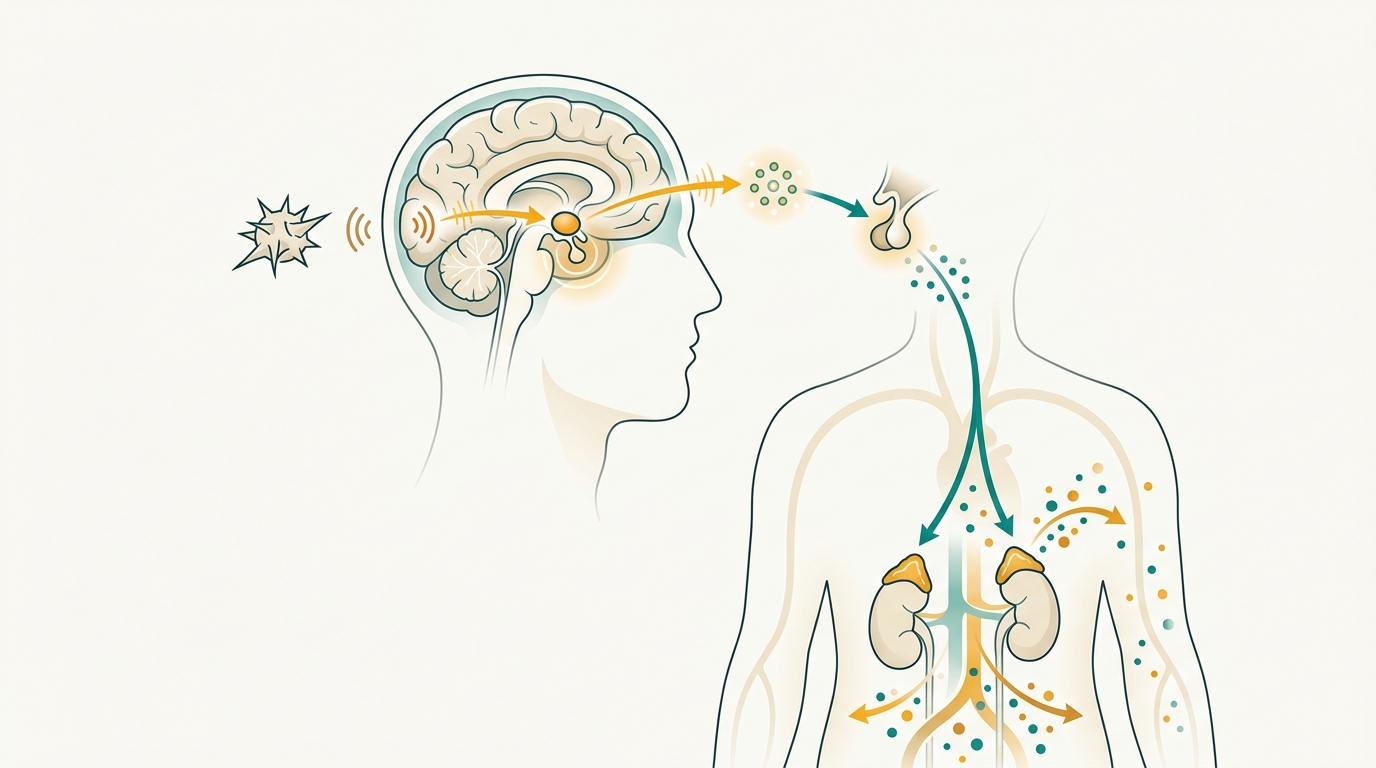
Imagine your brain has an alarm system. When your amygdala detects a threat (a tiger, or just a passive-aggressive email), it sounds the alarm. Your hypothalamus responds by triggering CRH, which tells your pituitary gland to release ACTH.
This travels to your adrenal glands, which pump out cortisol and adrenaline. Your fight-or-flight response engages: heart rate spikes, digestion halts, and immune function is suppressed so you can survive the immediate threat.
In acute situations, this is healthy. But in chronic stress, this loop NEVER turns off. Your body is essentially marinading in cortisol 24/7.
Healthy and short-lived. A near-miss in traffic, a tough workout, or an exam. The body quickly returns to homeostasis.
Frequent triggers. The "Type A" personality, constant tight deadlines, and taking on too much responsibility.
Persistent and destructive. A toxic job, a bad relationship, or financial ruin. This physically alters brain structure over time.
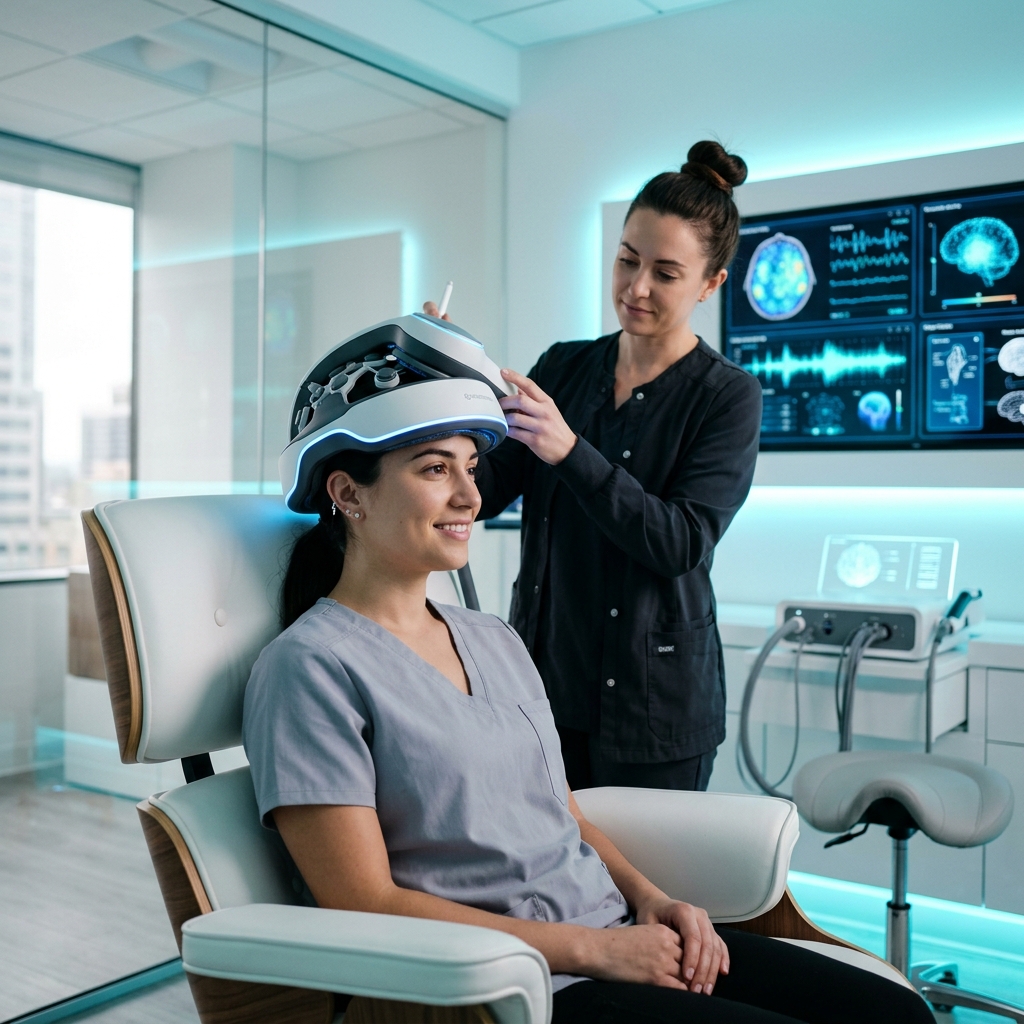
Targeted, fast-acting, and heavily researched. Modern medicine treats stress primarily as a neurotransmitter and psychological issue.
Medications aim to adjust brain chemistry directly.
Rewiring thought patterns to reduce the perception of threat.
Clinical interventions using lifestyle as treatment.
The frontier of psychiatric treatment.
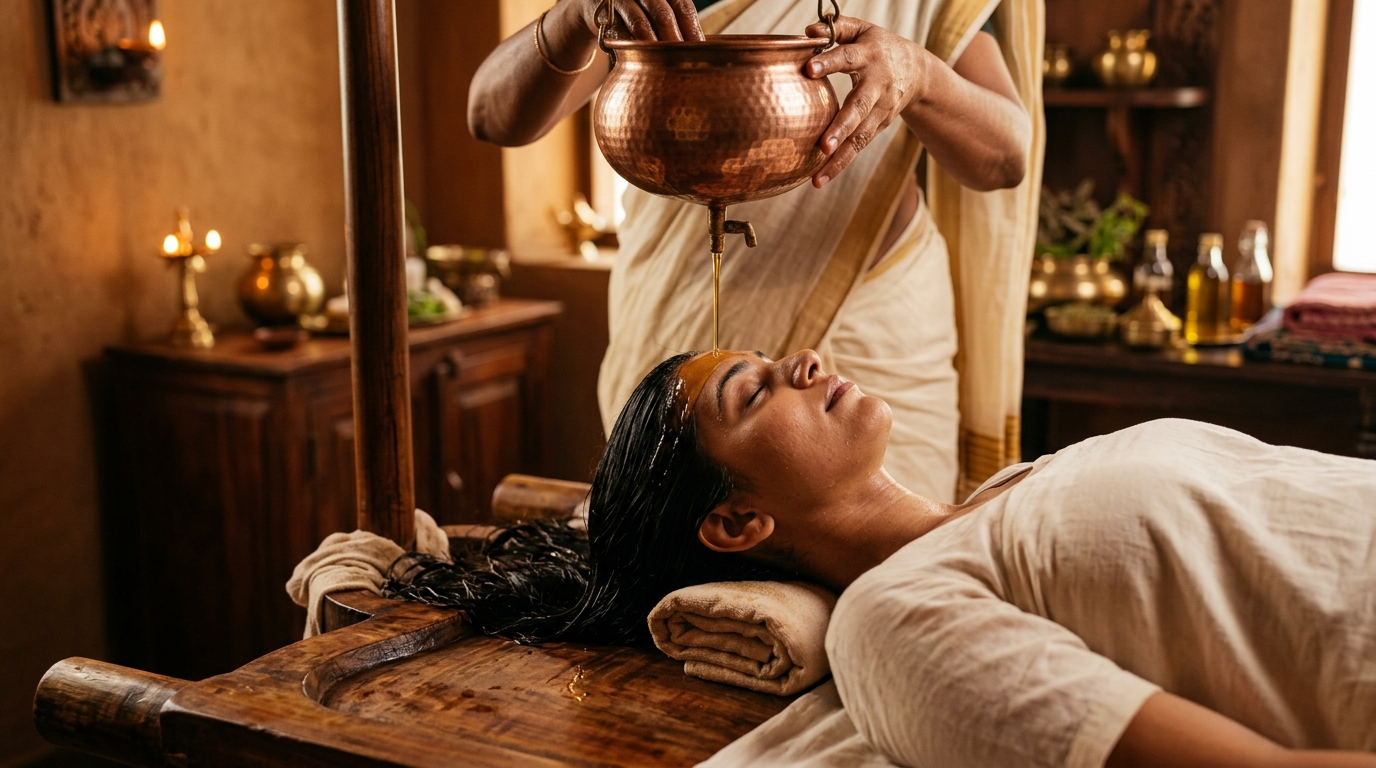
Holistic, systemic, and focused on root causes. Traditional systems view stress as an imbalance in the body's fundamental energies.
Views stress primarily as a Vata (air/ether) or Pitta (fire) imbalance.
Views stress as Qi stagnation, often manifesting as a Liver or Kidney imbalance.
Not just exercise—a complete technology for nervous system retraining.
Practices from around the globe focused on natural harmonization.
Reductionist: Breaks the body down into parts. Views stress primarily as a neurochemical imbalance or psychological disorder in the brain. Focuses on symptom eradication.
Holistic/Systemic: Views the body as an interconnected web. Stress is seen as a downstream symptom of an overall systemic imbalance or lifestyle mismatch. Focuses on restoring harmony.
Targeted & Acute: Fast-acting interventions (medications) to force biochemical changes. Standardized dosages applied generally across populations based on diagnosis.
Gradual & Root-Cause: Lifestyle restructuring, gentle herbal tonics, and practices to gently coax the nervous system back to baseline. Highly individualized to body type.
Higher Risk: Pharmaceuticals often come with significant side effect profiles (insomnia, weight gain, emotional blunting, dependency) because they force biological pathways.
Lower Risk: Generally very safe when prescribed correctly, as adaptogens and practices work *with* the body's natural feedback loops rather than overriding them.
Gold Standard RCTs: Backed by vast amounts of double-blind, placebo-controlled trials. Easily quantifiable and reproducible in clinical settings.
Empirical History + Growing RCTs: Thousands of years of observational data. Modern clinical trials are increasingly validating these practices, but standardized testing of holistic multi-herb formulas remains challenging.
We don't have to choose. The most effective approach for chronic stress bridges the gap.
This is the philosophy behind Swayu. We use modern diagnostic tools and clinical research to validate and apply ancient protocols personalized to your unique biology.
Select the statement that best describes your current state to see an integrative recommendation.
The fastest way to shut off cortisol production is to manually override the autonomic nervous system using your diaphragm. Try this 4-7-8 breathing technique:
Why it works: Extending the exhale longer than the inhale signals to the brain that you are safe, instantly engaging the parasympathetic 'rest and digest' state.
What to expect when beginning an integrative stress protocol.
Acute Relief: Through breathwork and initial sleep hygiene changes, you experience moments of calm. Adaptogens begin accumulating in your system.
Sleep Restoration: Botanical interventions (like Ashwagandha) begin lowering baseline cortisol, leading to fewer night wakings and better energy upon waking.
Cognitive Shift: CBT techniques or mindfulness practices start rewiring thought patterns. You notice a slight gap between a stressful trigger and your reaction.
Systemic Resilience: The HPA axis resets. Your baseline state shifts from hyper-vigilance to calm alertness. Hormonal and immune functions improve.
Yes. While "stress" itself is a physiological response, chronic stress is recognized as a major driver of conditions like hypertension, immune suppression, and clinical anxiety.
See a doctor immediately if stress is causing severe physical symptoms (chest pain), debilitating panic attacks, or thoughts of self-harm. For general burnout, poor sleep, or mild anxiety, lifestyle and natural remedies are excellent starting points.
Never stop prescribed medication without consulting your doctor. While Ashwagandha is highly effective for stress, tapering off SSRIs or benzodiazepines must be medically supervised.
Ayurveda doesn't just look at anxiety; it looks at your dosha. A Vata-type stress manifests as racing thoughts and fear. Pitta-type stress shows up as anger, frustration, and inflammation. Treatments are customized accordingly.
For mild to moderate anxiety, studies (like the 2014 JAMA meta-analysis) show mindfulness meditation can be as effective as antidepressants, without the side effects.
Physiologically, a physiological sigh (two sharp inhales followed by a long, slow exhale) or splashing cold water on your face instantly engages the parasympathetic nervous system.
If left unchecked for years, high cortisol can lead to cardiovascular disease, insulin resistance, and reduced hippocampal volume. However, the body is highly neuroplastic and can heal with proper intervention.
Yes, if misused. For example, Kava is highly effective for anxiety but has rare risks of liver toxicity. Always source high-quality herbs and consult a professional.
A good rule of thumb: If your symptoms prevent you from executing lifestyle changes (you're too anxious to exercise or meditate), medication may be needed as a bridge. If you can function, lifestyle is the foundation.
Absolutely, and this is the goal of Integrative Medicine. For example, you might use CBT (modern) alongside Yoga and Ashwagandha (traditional). Always check for herb-drug interactions with your doctor.
The content provided on Swayu is for informational purposes only and is not intended as medical advice, diagnosis, or treatment. Always consult with a qualified healthcare physician before starting any new supplement regimen or altering medical treatments.