The Classical Texts
of Ayurveda

The medical encyclopedias that codified 5,000 years of healing knowledge — and why they still matter today.

📚 Why These Texts Matter

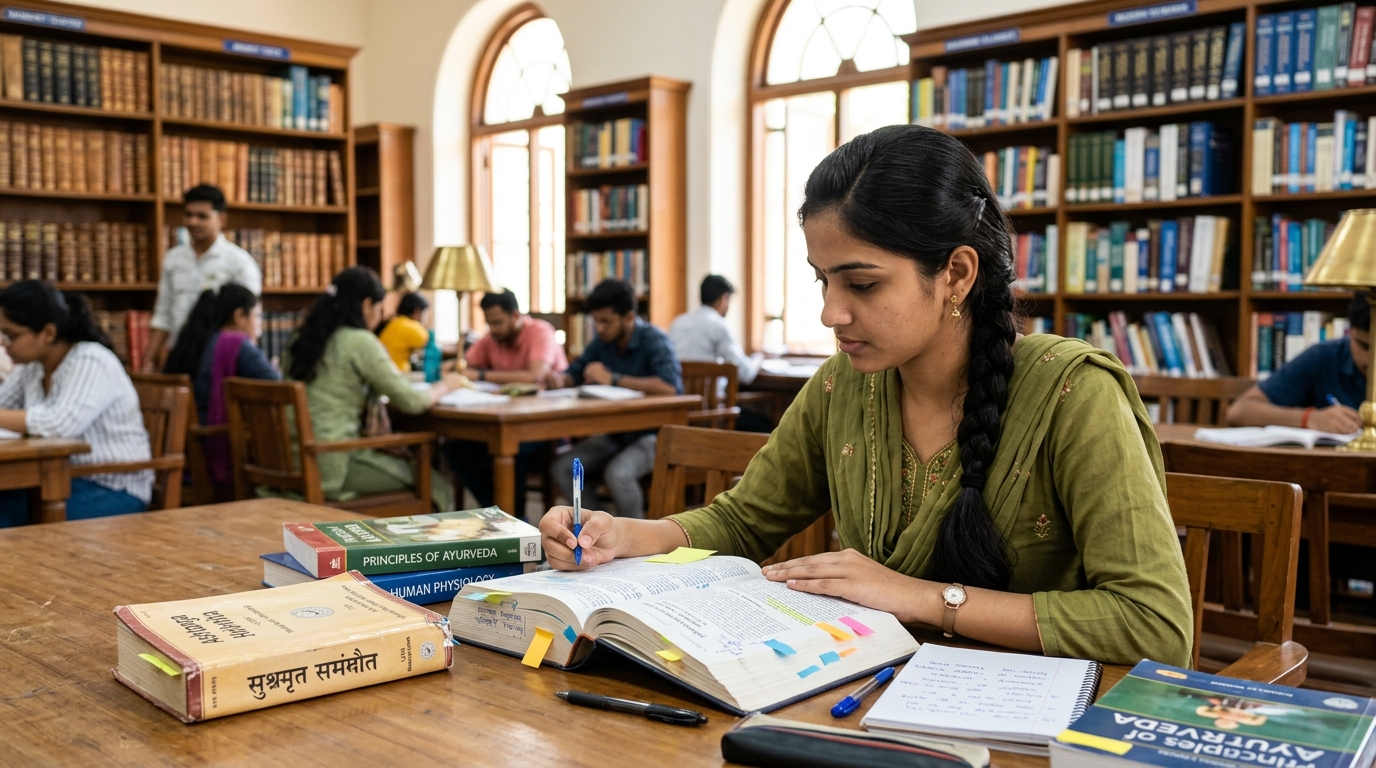
Ayurveda isn't oral folklore — it's a written, systematic medical tradition documented in structured textbooks that rival any ancient medical literature in scope and precision. These texts contain disease classifications, diagnostic frameworks, surgical techniques, pharmaceutical formulations, and ethical guidelines that preceded Western medical texts by centuries. Understanding them is key to understanding what Ayurveda actually is — and what it isn't.

6
Core Foundational Texts
3,000+
Years of Documentation
600+
Herbal Formulations
300+
Surgical Procedures
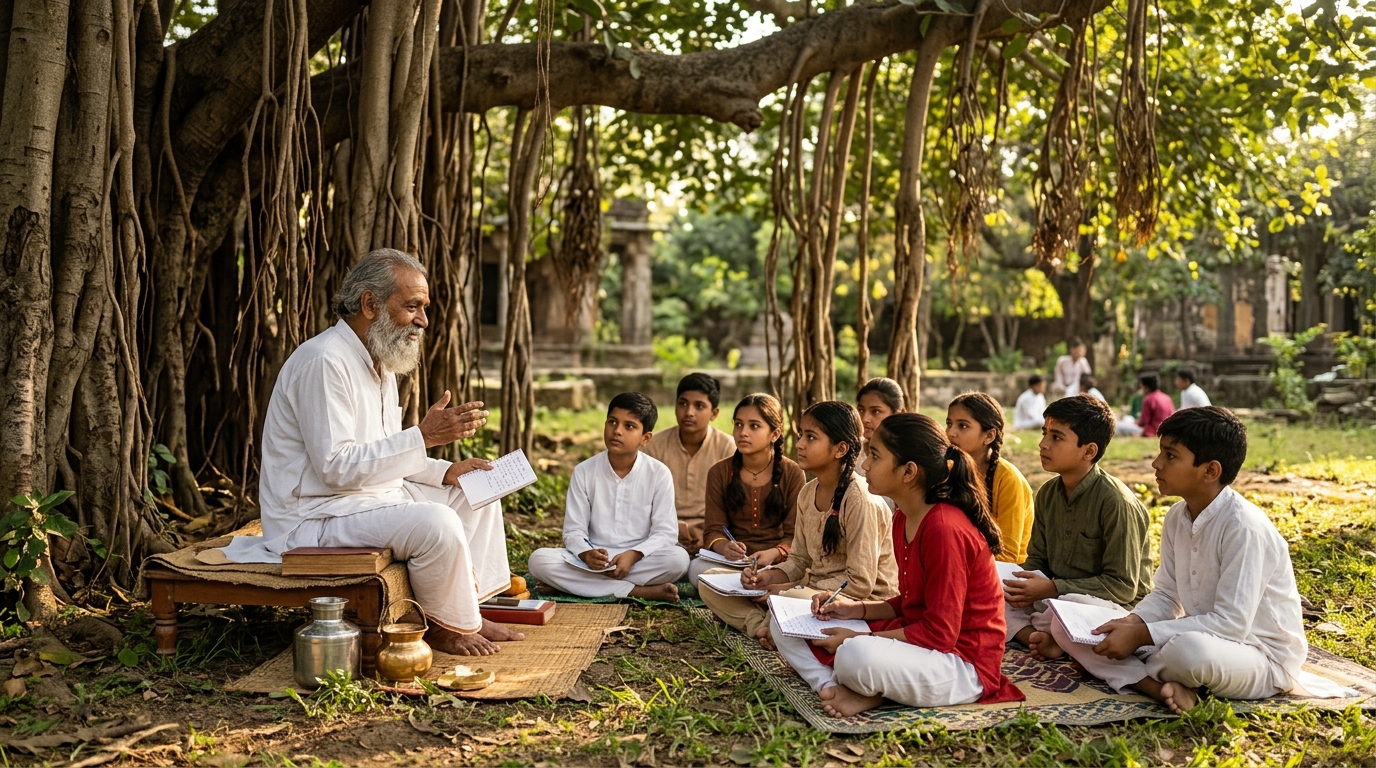
Gurukul teaching tradition

Before the Texts: The Vedic Tradition

Ayurveda's roots stretch back to the Rigveda (~1500 BCE) and Atharvaveda (~1200 BCE), which contain the earliest references to medicinal plants, healing hymns, and anatomical knowledge.

But these were hymns, not medical textbooks. The transformation from sacred verse to systematic medicine happened in the gurukul tradition — where knowledge was transmitted through years of apprenticeship, eventually being codified into the structured texts we know today.

Ancient Indian medical education required 6-7 years of study, including clinical observation, herb identification, surgical practice on wax models and vegetables, and ethical training — remarkably similar to modern medical education.
The Great Three

The Brihat Trayi (बृहत् त्रयी)

The three foundational pillars upon which the entire edifice of Ayurvedic medicine stands.

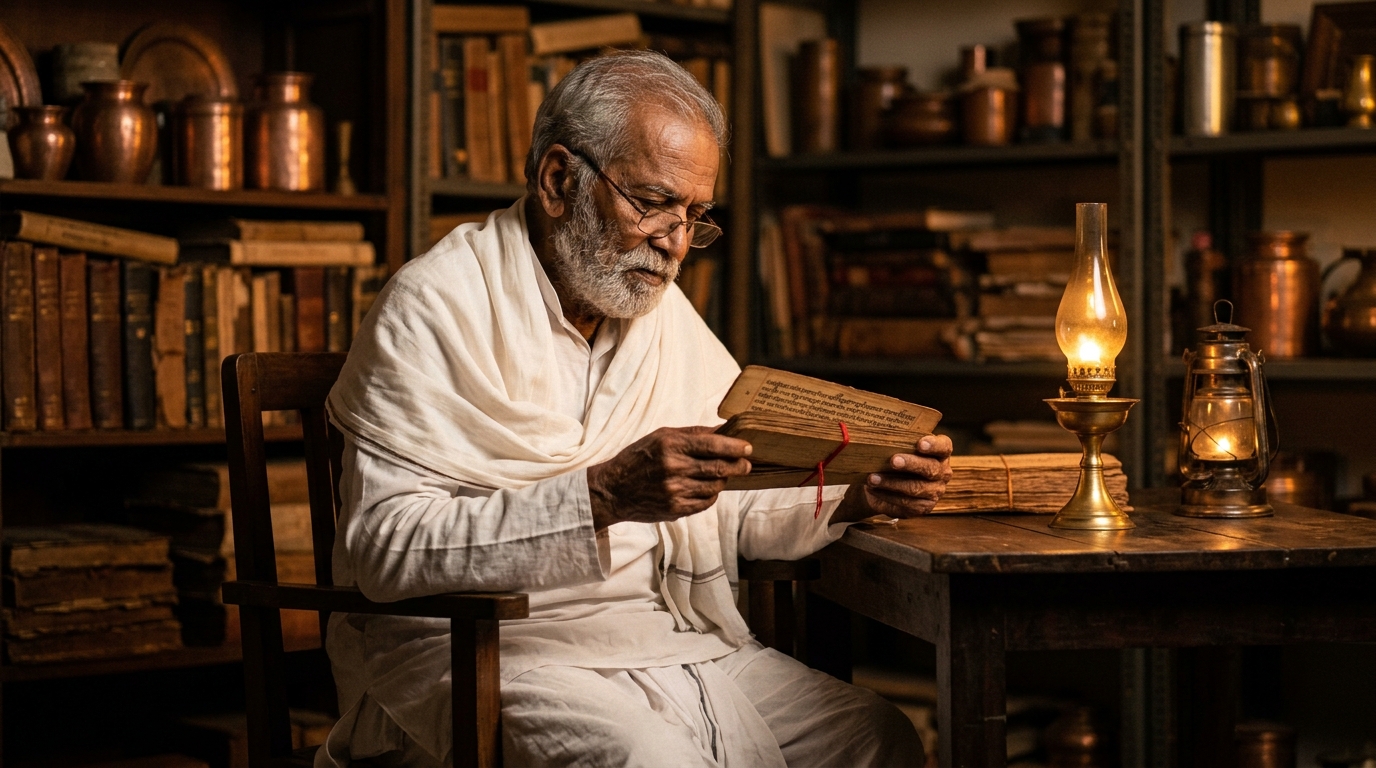
Charaka Samhita scholar

Charaka Samhita (चरक संहिता)

~700 BCE · Author: Maharishi Charaka

The most comprehensive Ayurvedic text on internal medicine (Kayachikitsa). Often called the "Bible of Ayurveda," it contains 8 divisions (Sthanas), 120 chapters, and over 600 herbal formulations.

What makes the Charaka Samhita extraordinary is its methodology. It describes a systematic clinical approach: examination of the patient (Rogi Pariksha), understanding the disease (Roga Pariksha), determining prognosis, and selecting treatment — a framework remarkably similar to modern clinical practice.

💡 Key contribution: The concept of Tridosha (Vata, Pitta, Kapha) — Ayurveda's constitutional framework that modern research is now linking to genetic polymorphisms and pharmacogenomics.

Sushruta surgical instruments

Sushruta Samhita (सुश्रुत संहिता)

~600 BCE · Author: Maharishi Sushruta

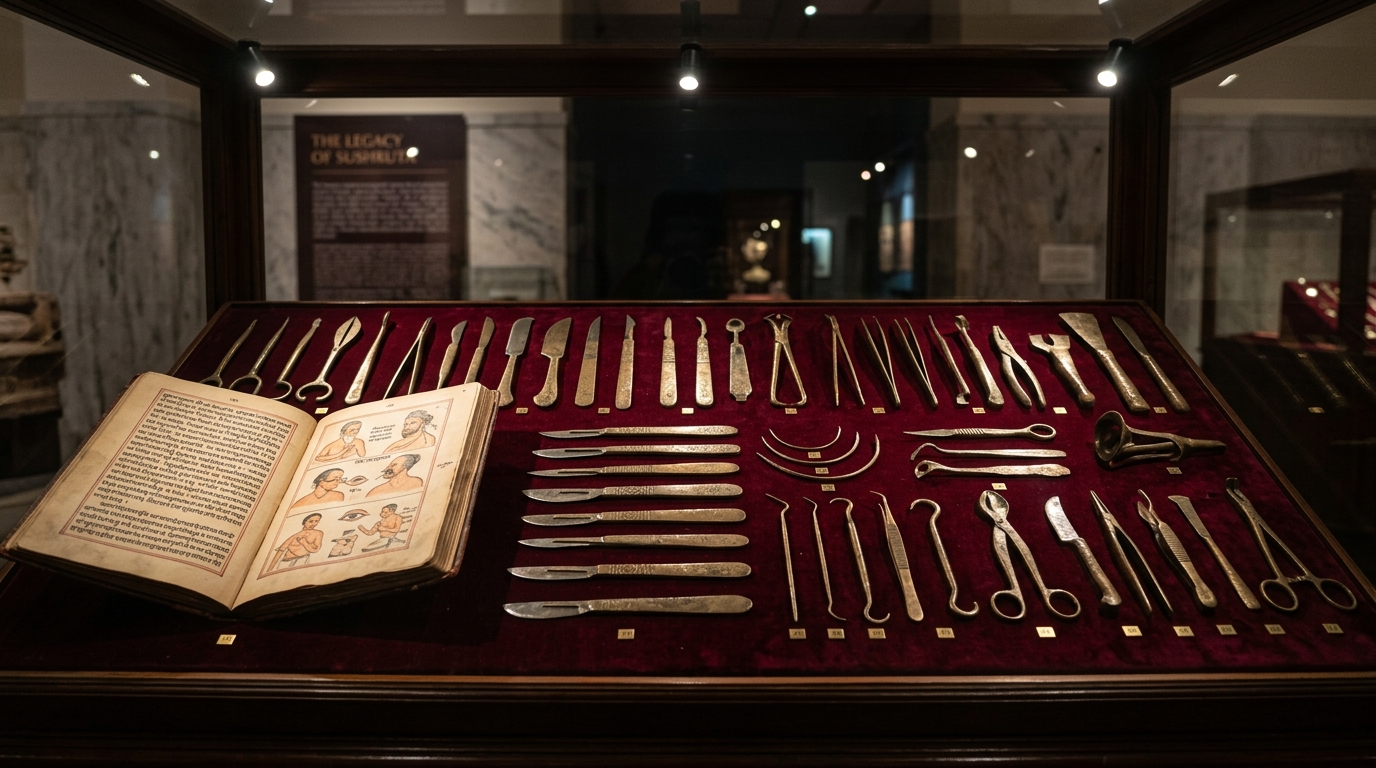
The world's first comprehensive surgical textbook. Sushruta is rightly called the "Father of Surgery" — he documented procedures that Western medicine wouldn't develop for another two millennia.

The text describes over 300 surgical procedures using 120 surgical instruments, including scalpels, forceps, trocars, and needles. It covers rhinoplasty (nose reconstruction), cataract surgery (couching), lithotomy (bladder stone removal), and even Cesarean sections.

💡 Astonishing detail: Sushruta described training surgeons by practicing incisions on watermelons, lotus stems, and animal bladders — a method of simulation training that medical schools use to this day.

"These are not religious scriptures. They are medical textbooks — structured, systematic, and clinically precise."
Ashtanga Hridaya student

Ashtanga Hridaya (अष्टाङ्ग हृदय)

~7th Century CE · Author: Vagbhata

If Charaka is the encyclopedia and Sushruta is the surgical manual, then Vagbhata's Ashtanga Hridaya is the brilliant synthesis. It compiles, organizes, and streamlines knowledge from both predecessors into a more accessible format.

Divided into 6 sections (Sthanas) with 120 chapters, it covers all eight branches of Ayurveda: internal medicine, surgery, ENT, toxicology, psychiatry, pediatrics, rejuvenation, and reproductive health.

💡 Global influence: The Ashtanga Hridaya was translated into Arabic, Tibetan, and Chinese, influencing medical traditions across Asia and the Middle East. It remains the primary textbook in BAMS (Bachelor of Ayurvedic Medicine) programs across India today.

The Lesser Three

The Laghu Trayi (लघु त्रयी)

Three later compilations that expanded Ayurveda's diagnostic, pharmacological, and botanical knowledge.

~700 CE · Text 4 of 6
Madhava Nidana
माधव निदान
Author: Madhavakara

The gold standard for Ayurvedic diagnostics. While the Brihat Trayi covered treatment, Madhava Nidana focused entirely on disease recognition — Nidana (etiology), Purvarupa (prodromal symptoms), Rupa (clinical signs), and Samprapti (pathogenesis).

It classifies 79 diseases with detailed differential diagnosis frameworks — a diagnostic precision that's remarkably modern.

79
Diseases
69
Chapters
~1300 CE · Text 5 of 6
Sharangadhara Samhita
शार्ङ्गधर संहिता
Author: Sharangadhara

The pharmacology manual of Ayurveda. This text systematized the preparation of medicines — kashaya (decoctions), churna (powders), vati (tablets), taila (oils), ghrita (medicated ghee), and bhasma (calcined metals).

It introduced the concept of Nadi Pariksha (pulse diagnosis) — now one of the most iconic Ayurvedic diagnostic methods.

32
Dosage Forms
3
Sections
~1500 CE · Text 6 of 6
Bhavaprakasha
भावप्रकाश
Author: Bhavamishra

The materia medica — the most comprehensive catalog of Ayurvedic ingredients. What makes it unique is that Bhavamishra updated the knowledge base with New World plants like tobacco, syphilis treatments, and substances introduced by trade routes.

Its Nighantu (glossary) section describes 470+ herbs and minerals with properties, actions, doses, and preparations.

470+
Herbs
3
Volumes
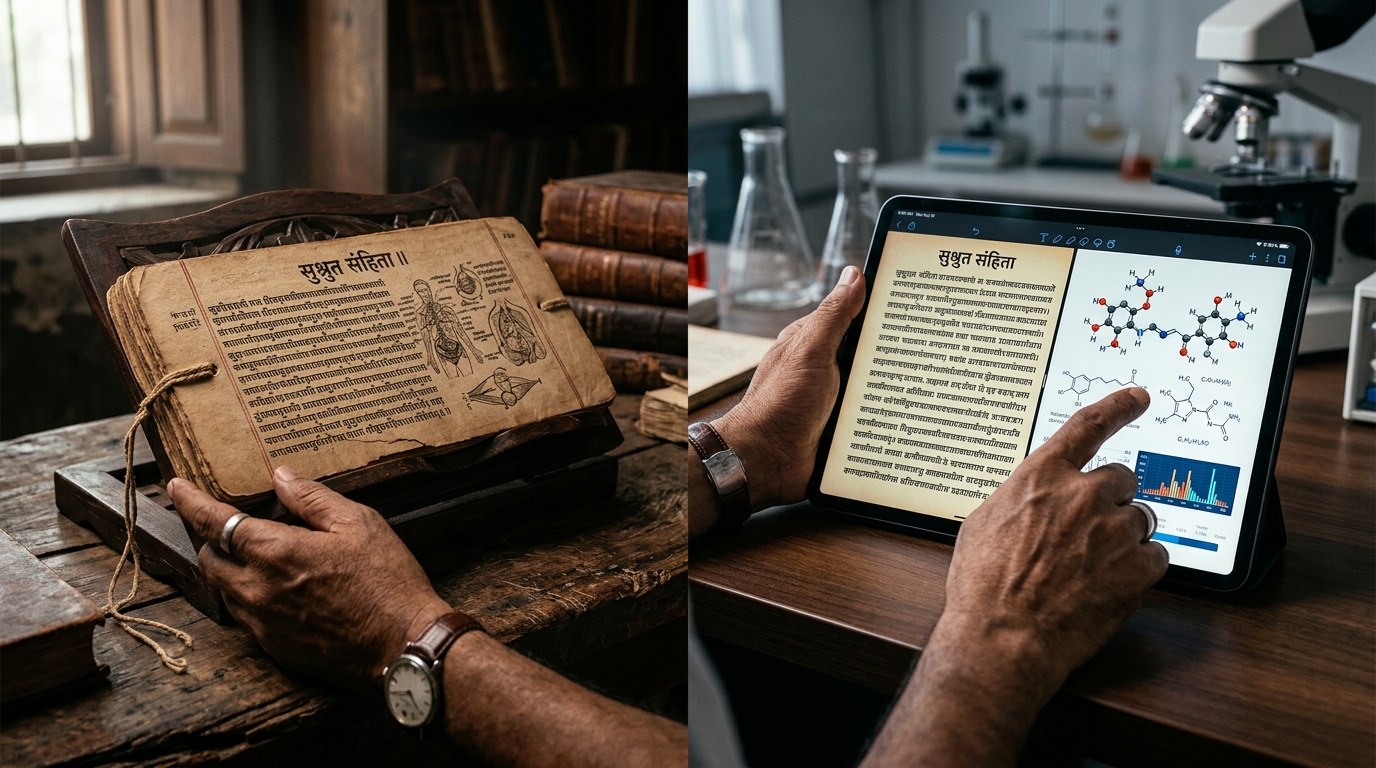
Ancient texts meet modern science

Why These Texts Still Matter Today

These aren't museum artifacts — they're active reference sources for modern pharmaceutical research. Over 60% of the plant-based drugs in modern pharmacopeias trace their discovery to traditional medical texts, including Ayurvedic ones.

Reverse pharmacology — starting from traditional use and working backward to molecular validation — has become a major drug discovery strategy. Institutions like CSIR, CCRAS, and IIT Bombay actively mine these texts for new drug leads.

The Indian government's Traditional Knowledge Digital Library (TKDL) has digitized 2,50,000+ Ayurvedic formulations from these texts to prevent biopiracy and protect India's intellectual heritage.

📖 The Legacy

The classical texts of Ayurveda represent one of humanity's greatest intellectual achievements in medicine. They are not perfect — they contain ideas that modern science has superseded. But their core observations about digestion, constitution, lifestyle, and herbal therapeutics are being validated at an accelerating pace.

At Swayu, we honor this legacy by doing exactly what these ancient authors would have wanted: testing, verifying, and refining their knowledge using the best tools available. That's what our 8 Pillars of Trust framework is built on — ancient wisdom, modern evidence.

Continue Reading

Explore the Science Behind the Tradition

Now that you know the foundational texts, dive into the modern evidence that validates their claims.

Is Ayurveda Scientific? → All Articles →